
GLP-1 news report
Beyond weight: Oura brings medication context to GLP-1 tracking
Oura has added GLP-1-specific tracking to its app, while a LillyDirect collaboration and subsequent Lilly investment point to growing interest in support that extends beyond the prescription.
What the source reports
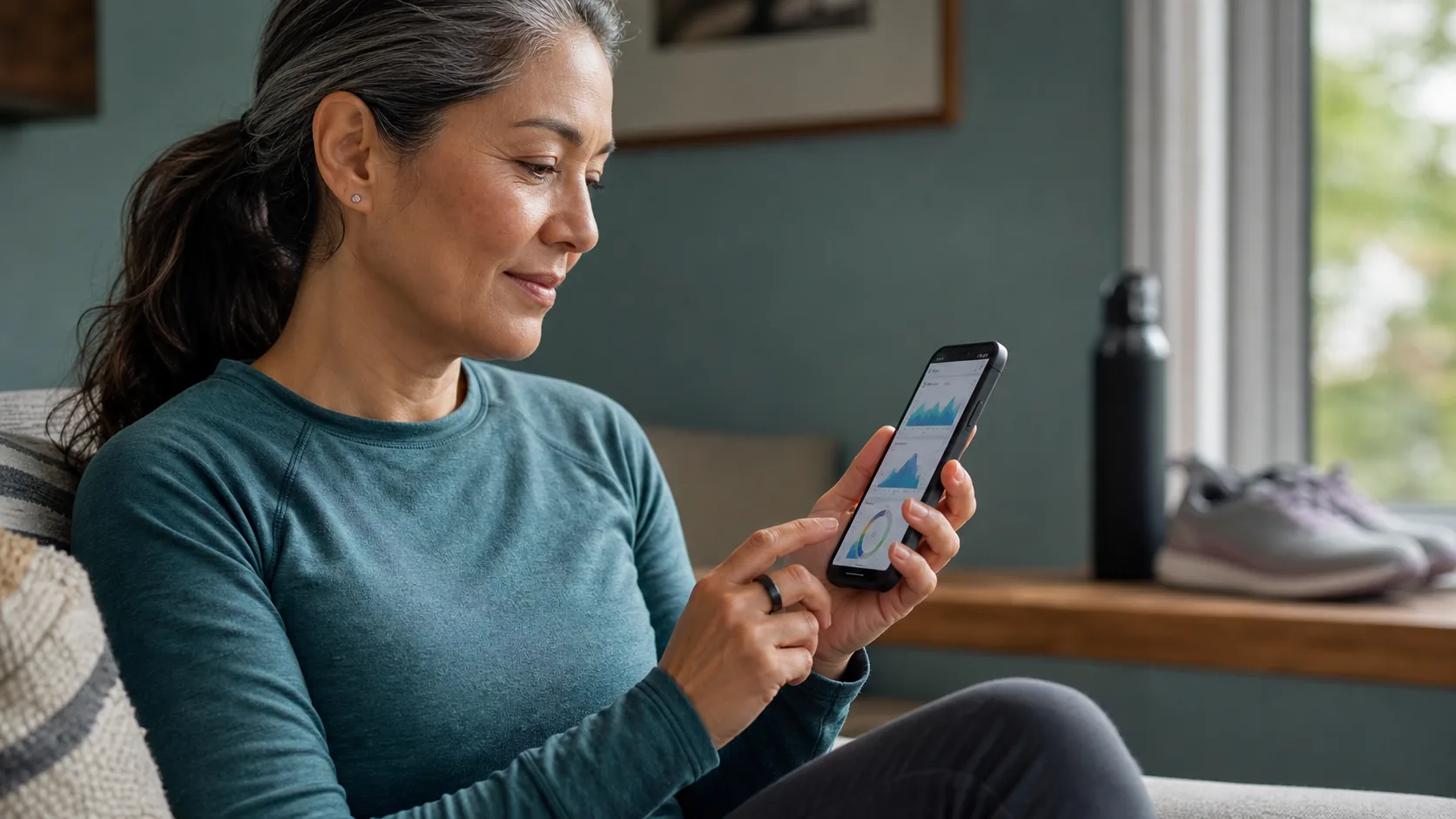
Oura announced GLP-1 Insights on 28 May 2026 as a dedicated experience inside the Oura App. It brings together four main functions: dose tracking, side-effect logging, optional weight tracking and personalised insights based on information recorded by the member.
Members can log a medicine, dose and schedule, receive check-in reminders and record experiences such as nausea, fatigue, appetite changes and gastrointestinal symptoms. Logged doses and symptoms are displayed alongside longer-term Oura trends, including sleep, activity and recovery data.
Oura says its Advisor feature can use the recorded medication schedule and symptoms as context. For example, it may highlight a recurring change in a Readiness Score after a weekly dose. That is a pattern in the member's data, not a diagnosis or proof that the medicine caused the change.
Where the feature is available
Oura says GLP-1 Insights is available to members using an Oura Ring Gen3 or newer in the United States, United Arab Emirates and India. Weight can be entered manually or imported from a compatible smart scale through Apple Health or Health Connect.
The feature is not a prescribing service. Oura states that it does not recommend dose changes or replace clinical judgement, and that the Oura Ring is not a medical device intended to diagnose, treat, cure, monitor or prevent medical conditions.
How Lilly is involved
On 23 June, Oura and LillyDirect announced a collaboration focused on access to Oura's behavioural support tools. LillyDirect is Eli Lilly and Company's US digital health platform, which connects users with health information, independent care providers and pharmacy services.
The offer provides LillyDirect users with a complimentary Oura Ring sizing kit while supplies last. It does not provide a free or discounted ring, and LillyDirect says no purchase or Lilly medicine is required to claim the kit.
Both companies state that the collaboration does not involve sharing Oura health data with Lilly. LillyDirect's offer page says data collected by the ring remains in the user's Oura account.
On 15 July, Oura separately announced that Lilly had made an equity investment in the wearable company. The announcement described the investment as support for developing more connected health tools, but did not present clinical trial results for GLP-1 Insights.
Why the move matters
The announcements illustrate a broader change in how companies are positioning support around GLP-1 treatment. Weight remains one measure, but Oura's product is designed to place it alongside sleep, activity, recovery, symptoms and the timing of recorded doses.
This gives users a way to ask more specific questions about their own routines: whether sleep or readiness tends to change at a similar point after a dose, whether symptoms recur and how activity changes over longer periods. Such observations may help organise a conversation with a care team, but wearable measurements and app-generated explanations require appropriate context.
Medication reminders are relatively straightforward to reproduce. The more distinctive product layer is interpretation: combining several streams of longitudinal data and deciding which patterns are useful enough to show. This is also where careful wording, privacy controls and clear boundaries between wellness information and medical advice become particularly important.
What remains uncertain
The company announcements do not establish that GLP-1 Insights improves medication persistence, weight loss, quality of life or other health outcomes. Demonstrating those benefits would require appropriately designed studies comparing outcomes with and without the feature.
A change in sleep, heart rate or readiness near a recorded dose can have many explanations, including illness, stress, activity, diet and measurement variability. An app can identify timing and correlation, but it cannot infer medicine-related cause from an individual's wearable data alone.
It also remains to be seen how widely people will use the feature over time, whether its interpretations are consistently useful and how access will expand beyond the three launch markets. For now, the development is best understood as a significant product and investment signal—not clinical evidence that wearable-supported GLP-1 care produces better outcomes.
Primary sources
- Introducing GLP-1 Insights — Oura (accessed 2026-07-30)
- Oura and LillyDirect to Expand Support for People Using GLP-1 Therapies with New Tools and Savings Options — Oura (accessed 2026-07-30)
- Medicine is one piece. Get the full picture. — LillyDirect (accessed 2026-07-30)
- Lilly Makes an Equity Investment in Oura, Supporting Oura's Vision for More Connected Care — Oura (accessed 2026-07-30)