
What a GLP-1 tracker can help you remember
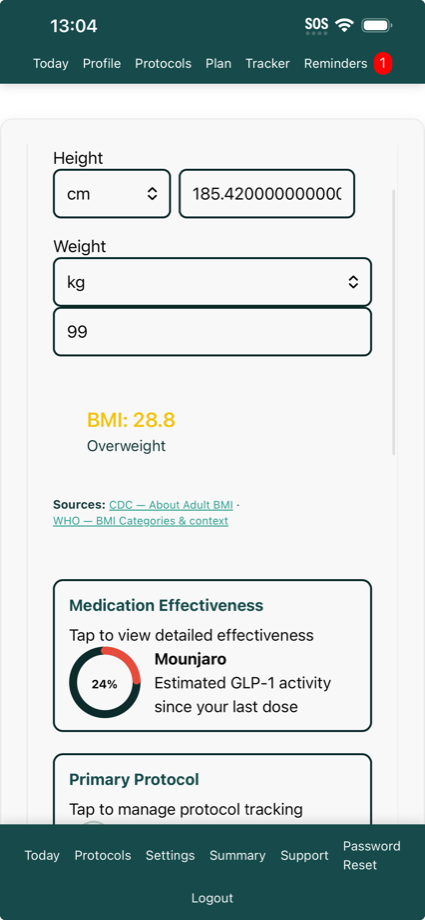
GLP-1 treatment often involves information spread across different places: a medication schedule, weight measurements, food or hydration notes, symptoms, movement and questions for an appointment. A tracker brings those observations together so you can look back at the week rather than relying on memory.
Tracking is not a test and it does not need to be perfect. The most useful record is usually the one you can maintain. Choose a few details that answer a real question, then add more only when they remain helpful.
A simple weekly tracking rhythm
Medication routine
Record the medicine name, the date and time it was taken, and the dose exactly as prescribed. A reminder can support the routine, but it must not decide when to change a dose or what to do after a missed dose. Those instructions vary by medicine and should come from the patient information leaflet, pharmacist or prescriber.
Symptoms and side effects
Note what happened, when it began, how long it lasted, how severe it felt and whether it affected eating, drinking, sleep or normal activity. This creates a clearer account for a clinician than a single label such as “felt unwell.” Read our side-effect tracking guide for a practical template.
Food, protein and hydration
Appetite and usual eating patterns can change. A short record of meals, protein-containing foods and drinks can reveal gaps that are hard to notice day to day. Individual nutrition and fluid needs vary, so the tracker should record your routine rather than prescribe a target.
Progress beyond one number
Weight can be one measure, but it is not the only useful one. Energy, strength, mobility, sleep, appetite, clothing fit and consistency with agreed habits may add context. Compare longer-term patterns rather than overreacting to a single measurement.
Use notes to prepare for appointments
Before an appointment, review the previous few weeks and identify the questions that matter most. Useful prompts might include:
- Which symptoms appeared repeatedly, and how long did they last?
- Have eating or drinking patterns changed enough to cause concern?
- Was it difficult to follow the prescribed schedule?
- Are there changes in other medicines, health conditions or daily function to discuss?
A record can support a conversation, but it cannot interpret symptoms, assess treatment effectiveness or replace clinical monitoring.
Authoritative guidance
- GLP-1 medicines for weight loss and diabetes: what you need to know — UK Medicines and Healthcare products Regulatory Agency.
- Overweight and obesity management: physical activity and diet — NICE.