
GLP-1 news report
McDonald’s is planning for the GLP-1 era—with smaller portions and more protein
The fast-food group is considering bowls, egg bites and more grilled chicken as eating habits change—but a protein-forward menu is not automatically a nutritionally balanced one.
What the source reports
McDonald’s used its 23 September investor update to describe how its menu may change as customers look for more protein, more flexible portions and different formats. US president Skye Anderson explicitly connected that opportunity with households using GLP-1 medicines.
Plans reported from the event include bringing grilled chicken sandwiches and wraps to the US and other markets and experimenting with choices such as bowls and egg bites. The company is not launching a medicine-linked diet or a dedicated GLP-1 menu; it is adapting mainstream products to demand it believes extends well beyond people taking these medicines.
McDonald’s said its research indicates roughly 30 million Americans use GLP-1 medicines and that 84% of US households with a user visit McDonald’s. Those are company-stated estimates. The public materials reviewed for this article do not provide the underlying survey sample or methodology, so they should be read as business research rather than population surveillance.
What may appear on menus
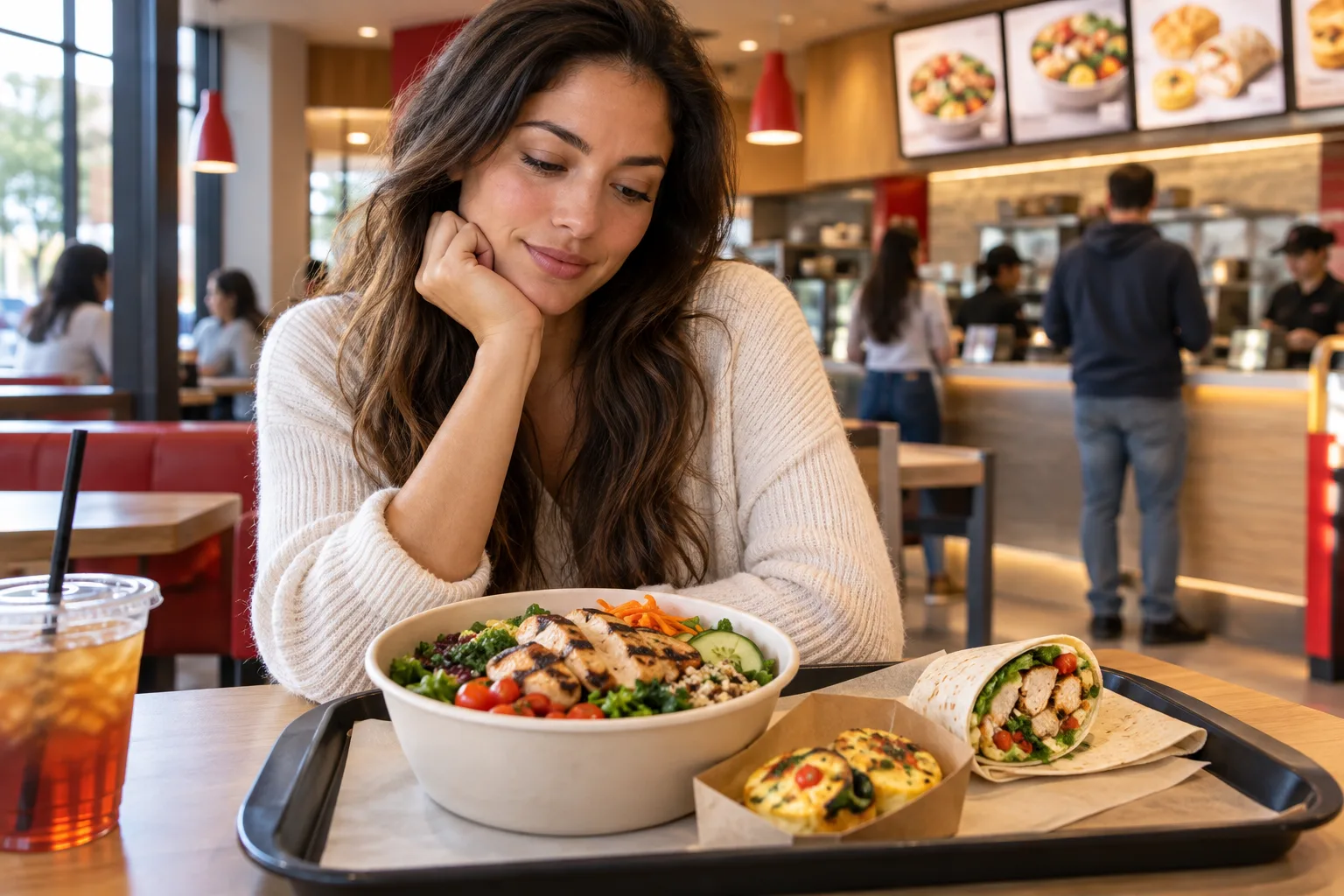
The direction is towards grilled chicken, snack-size formats, protein-forward breakfasts and bowls that can offer a different portion structure from a conventional burger-and-fries meal. Reports from the investor event also mention egg bites and chicken-topped bowls among the ideas under consideration.
Some of these products are plans or experiments rather than a finished nationwide menu. McDonald’s has not published a single launch timetable, price list or complete nutrition panel covering all the concepts discussed, and choices may vary by country and restaurant.
The broader corporate strategy also includes restaurant investment, chicken and beverage growth and operational changes. GLP-1 use is one consumer trend within that much larger commercial plan—not the sole reason the menu is changing.
Why GLP-1 use changes the restaurant calculation
GLP-1-based medicines can reduce appetite and increase feelings of fullness. For some customers, a standard fast-food meal may therefore feel too large, while a smaller item with a clear protein component can be easier to fit into a day when appetite is reduced.
The business implication is straightforward: restaurants built around frequent visits, snacks, drinks and fixed meal combinations have to consider customers who may order less food or compose meals differently. The menu response is becoming visible well outside pharmacies and clinics.
McDonald’s is not alone. Recent reporting describes food and restaurant businesses introducing smaller portions or explicitly protein-led products as GLP-1 use grows. That does not show that every change is caused by the medicines—protein demand, value concerns and changing tastes overlap—but GLP-1 use is now being discussed openly in menu strategy.
Protein-forward does not automatically mean balanced
Protein can be particularly useful when a reduced appetite makes it harder to eat enough overall, and it supports the maintenance of muscle alongside appropriate activity. But the word ‘protein’ on a menu does not tell customers the full nutritional picture.
Preparation method, sauces, cheese, refined carbohydrates, sodium, saturated fat, fibre and the size of drinks or sides can materially change a meal. A grilled chicken bowl may offer a useful starting point, but its final composition matters more than its marketing category.
People using GLP-1 medicines also differ. Nausea, reflux, constipation, diarrhoea and early fullness can affect which foods and portion sizes feel manageable. A smaller option can help with portion flexibility, but it is not medical nutrition advice and will not suit every person or every stage of treatment.
What remains uncertain
McDonald’s has not said its proposed products treat obesity, improve the effects of GLP-1 medicines or prevent side effects. No fast-food item becomes clinically endorsed merely because executives mention GLP-1 customers.
The announcement also should not be interpreted as evidence that people taking these medicines must follow a special branded diet. Individual nutrition needs depend on health conditions, medicine effects, dietary pattern and advice from an appropriate clinician or dietitian.
Finally, the estimates about how many GLP-1 households visit the chain describe potential customers, not their health outcomes or the quality of their overall diets. Commercial interest and clinical evidence answer different questions.
Why the story matters
The importance of the announcement is cultural as much as nutritional. GLP-1 medicines are beginning to influence how one of the world’s largest restaurant businesses talks about portion size, protein and product design.
That shift may eventually give customers more flexible choices, including people who are not using GLP-1 medicines. It may also produce a flood of ‘GLP-1 friendly’ marketing whose health value varies widely. Clear nutrition information will be more useful than a fashionable label.
For consumers, the practical test remains the complete meal: a portion that is tolerable, enough protein and fibre where possible, suitable hydration and an overall pattern that supports health rather than simply following a trend.
Bottom line
McDonald’s sees GLP-1-related changes in appetite as a business opportunity and is exploring smaller, more protein-focused products. That is a notable sign of how far the medicines’ influence has moved beyond healthcare.
The menu ideas could create more choice, but they should be judged using portion size and complete nutrition information—not assumed to be healthy, medically appropriate or ‘GLP-1 friendly’ because of the marketing story around them.
Sources and source material
- McDonald’s Advances NEXT Strategy to Become First Choice for More Customers, More Often — McDonald’s Corporation (accessed 2026-09-30)
- McDonald’s bets $8.5 billion on a sweeping restaurant makeover and new protein-focused menu — Associated Press (accessed 2026-09-30)
- McDonald’s is exploring ways to attract GLP-1 users — Axios (accessed 2026-09-30)
- McDonald’s Investor Day 2026 transcript — Stock Analysis (accessed 2026-09-30)