
GLP-1 news report
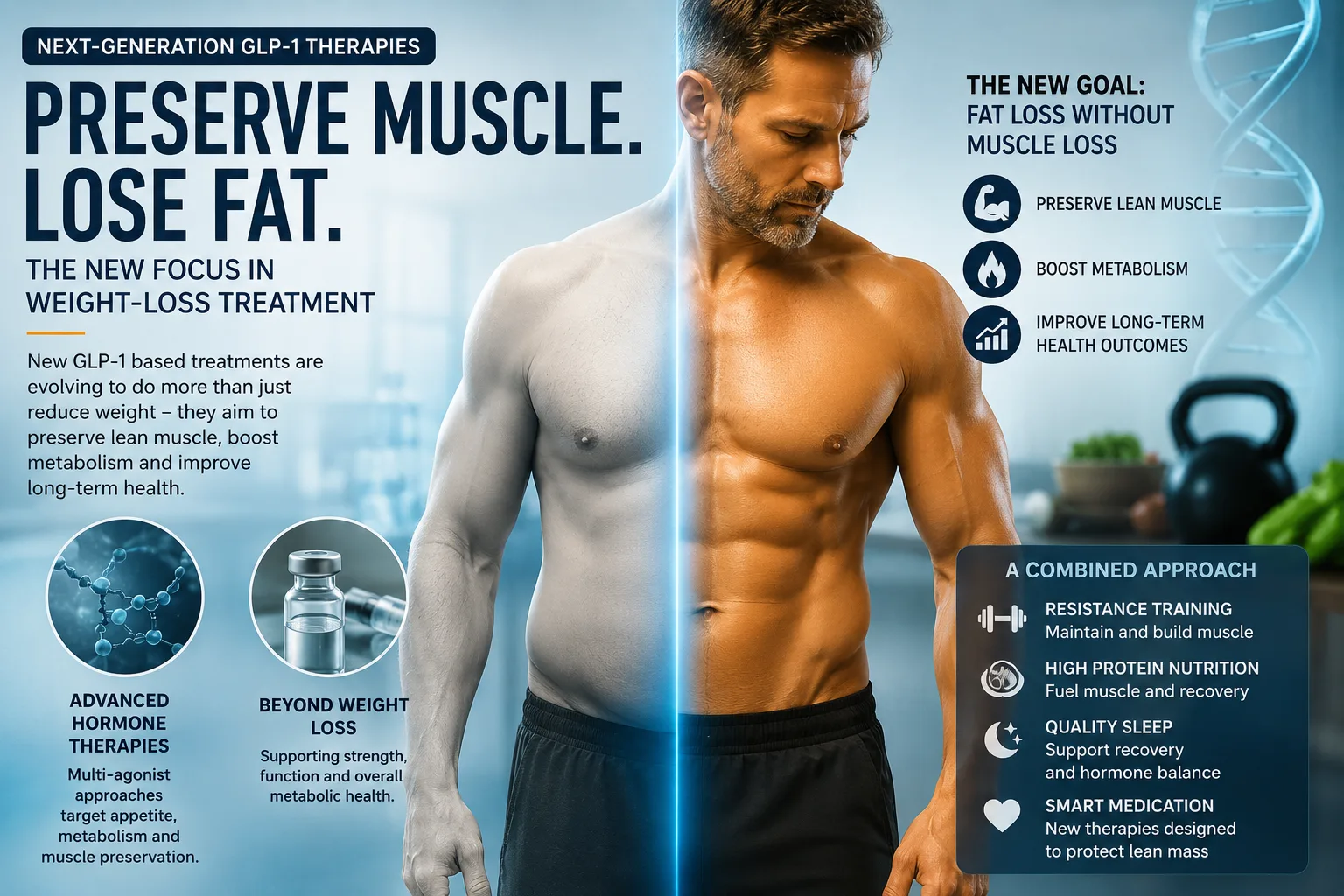
Muscle preservation is becoming a new focus in obesity-drug research
A recent Phase 2 trial tested whether an investigational muscle-directed treatment could reduce lean-mass loss during tirzepatide treatment, reflecting a wider shift towards body composition and physical function.
What the source reports
A Phase 2 trial published in Nature Medicine in June 2026 tested apitegromab, an investigational antibody that inhibits activation of myostatin, as an add-on to tirzepatide in 102 adults with overweight or obesity who did not have diabetes. Participants received tirzepatide plus either apitegromab or placebo for 24 weeks.
At week 24, the estimated loss of lean mass was 1.6 kg in the apitegromab group and 3.5 kg in the placebo group. The between-group difference was 1.9 kg, which the researchers described as 54.9% relative retention of lean mass.
Total body-weight loss was similar between the two groups: an estimated 11.2 kg with apitegromab and 12.5 kg with placebo. Lean mass accounted for 14.6% of the weight lost in the apitegromab group and 30.2% in the placebo group.
The study did not find notable between-group differences in its exploratory measures of physical function. Apitegromab remains investigational for this use, and the trial did not establish a long-term clinical benefit.
Why body composition is entering the conversation
Weight change alone does not distinguish fat mass from lean mass. In a body-composition substudy of the STEP 1 semaglutide trial, total fat mass and visceral fat mass fell, while absolute lean body mass also decreased. The proportion of body weight made up by lean mass nevertheless increased because fat loss was greater.
Lean mass is not the same as skeletal muscle. Measurements such as dual-energy X-ray absorptiometry include other non-fat tissues, so a change in lean mass cannot by itself show how muscle strength or everyday physical ability has changed.
This distinction helps explain why newer studies are adding measurements of body composition, strength and physical function alongside total weight loss.
A wider research pipeline
The apitegromab study is one of several programmes investigating muscle-related outcomes during obesity treatment. A completed Phase 2 trial studied bimagrumab, an antibody targeting activin type II receptors, alone and with semaglutide in 507 adults. Another completed Phase 2 study evaluated enobosarm with semaglutide and measured total lean mass as its primary outcome.
These programmes use different biological approaches and should not be treated as interchangeable. Trial registration or an early-phase result does not establish that a treatment is safe, effective or approved for routine obesity care.
Strength and function remain separate outcomes
Preserving tissue on a scan is not automatically the same as preserving strength, mobility or independence. Those outcomes require direct testing and longer follow-up, particularly in older adults and people who may already be vulnerable to frailty.
Earlier randomised research in older adults with obesity found that combining exercise with diet-induced weight loss preserved more lean mass and strength than weight loss alone. That evidence concerns a structured lifestyle intervention rather than an experimental muscle-directed medicine, but it illustrates why researchers measure function as well as body composition.
What remains uncertain
The apitegromab result came from a relatively small, 24-week Phase 2 trial. Larger and longer studies would be needed to determine whether the observed lean-mass difference produces durable improvements in strength, mobility, metabolic health, quality of life or clinical outcomes.
It also remains uncertain which people, if any, would benefit from adding a muscle-directed medicine to obesity treatment and whether the benefits would outweigh additional risks, treatment burden and cost.
For now, the study is evidence of a changing research question—not evidence that an investigational combination is ready for routine use.
Primary sources
- Apitegromab for lean mass preservation during tirzepatide-induced weight loss: a randomized, double-blind, placebo-controlled phase 2 trial — Nature Medicine (accessed 2026-07-29)
- EMBRAZE: Efficacy and Safety of Apitegromab for the Treatment of Adults Who Are Overweight or Obese — ClinicalTrials.gov (accessed 2026-07-29)
- Once-Weekly Semaglutide in Adults with Overweight or Obesity — The New England Journal of Medicine (accessed 2026-07-29)
- BELIEVE: Safety and Efficacy of Bimagrumab and Semaglutide in Adults Who Are Overweight or Obese — ClinicalTrials.gov (accessed 2026-07-29)
- QUALITY: Effect on Body Composition of Enobosarm in Patients Taking a GLP-1 for Chronic Weight Management — ClinicalTrials.gov (accessed 2026-07-29)
- Weight Loss and Exercise Differentially Affect Insulin Sensitivity, Body Composition, Cardiorespiratory Fitness, and Muscle Strength in Older Adults With Obesity — The Journals of Gerontology: Series A via PubMed (accessed 2026-07-29)